

Description
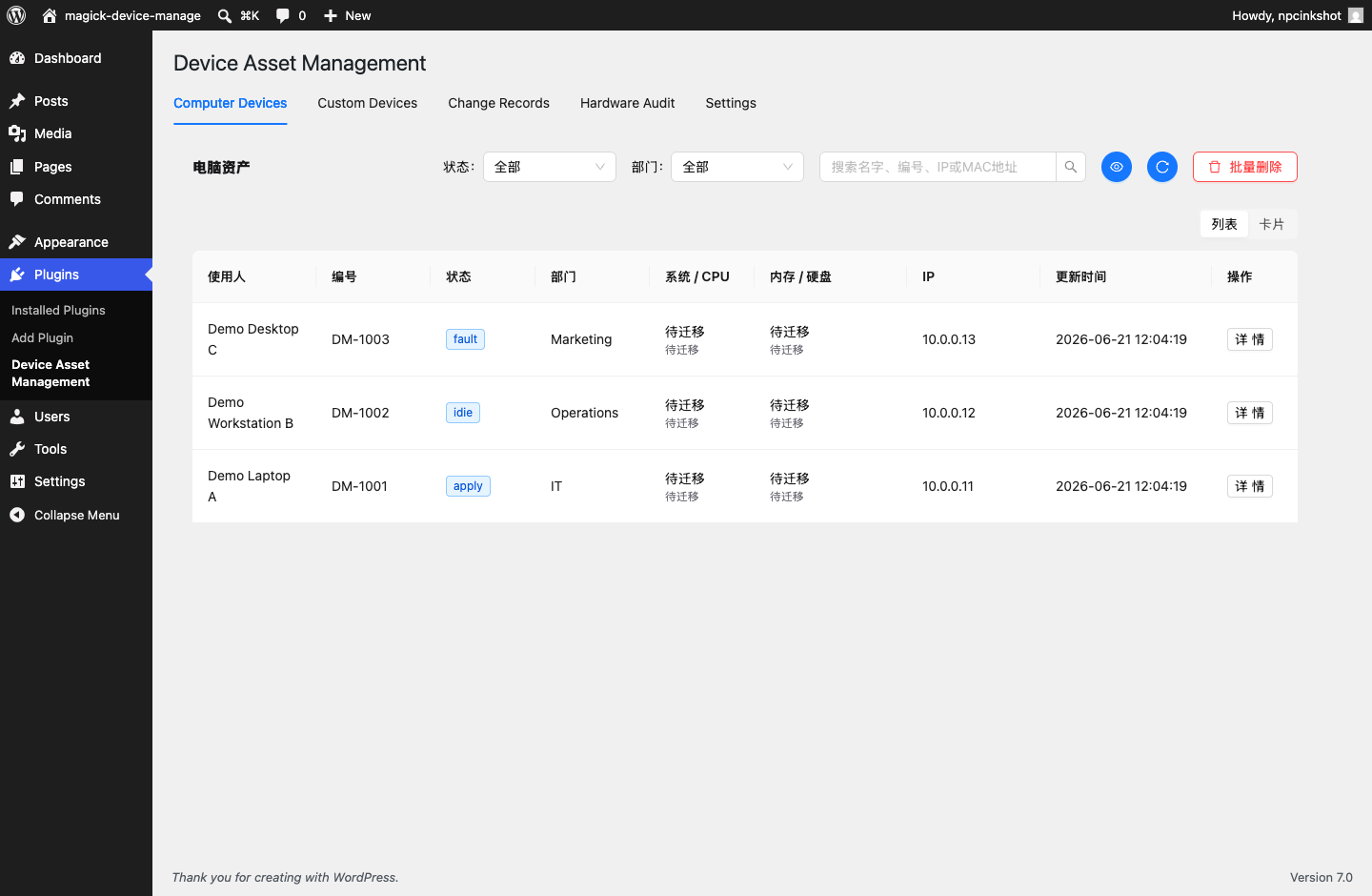
Npcink Device Inventory is a device asset management plugin for small teams that want to keep hardware inventory inside WordPress.
The plugin provides:
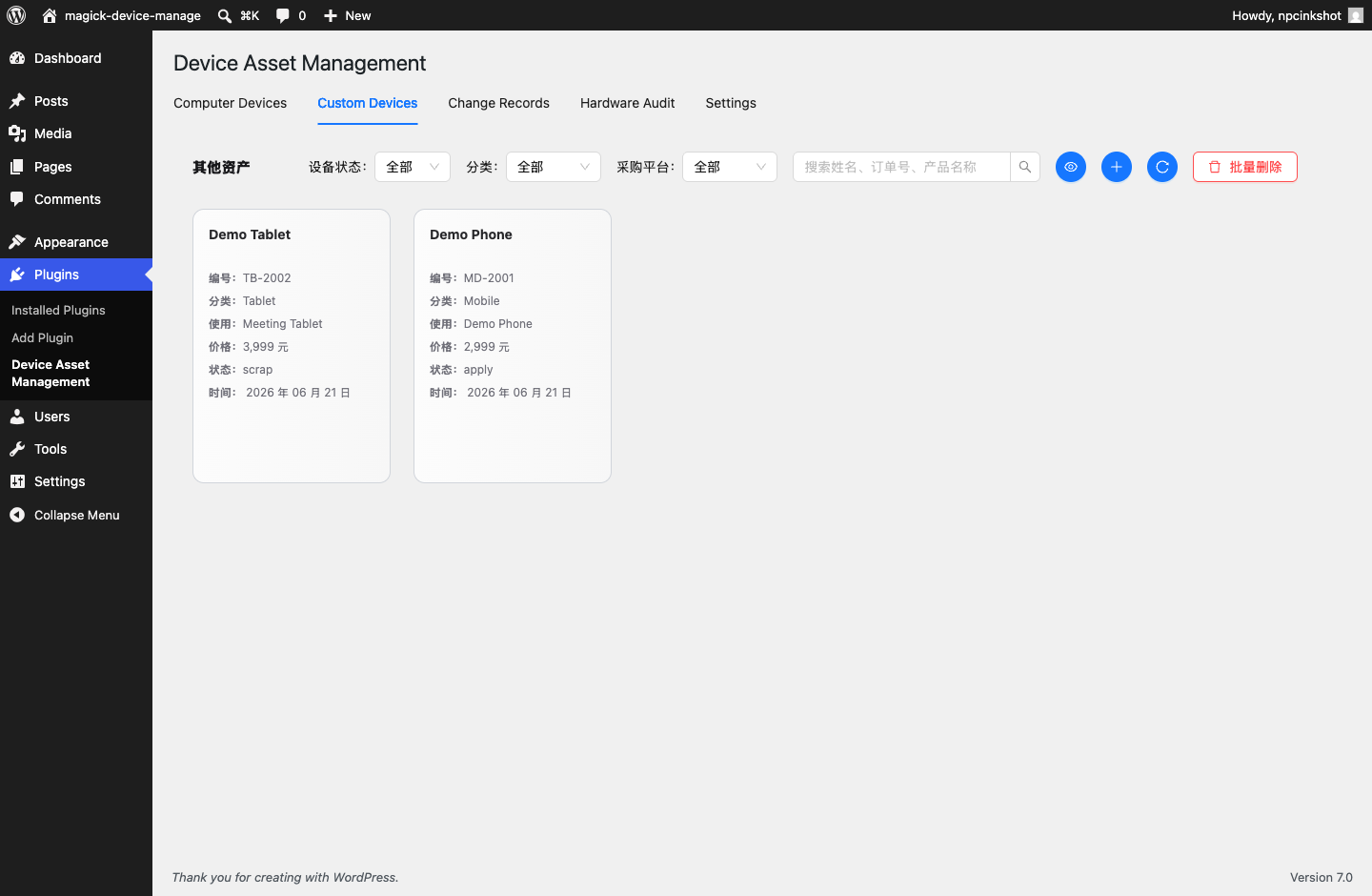
- A unified asset registry.
- Asset identities for matching repeated client observations to the same physical device.
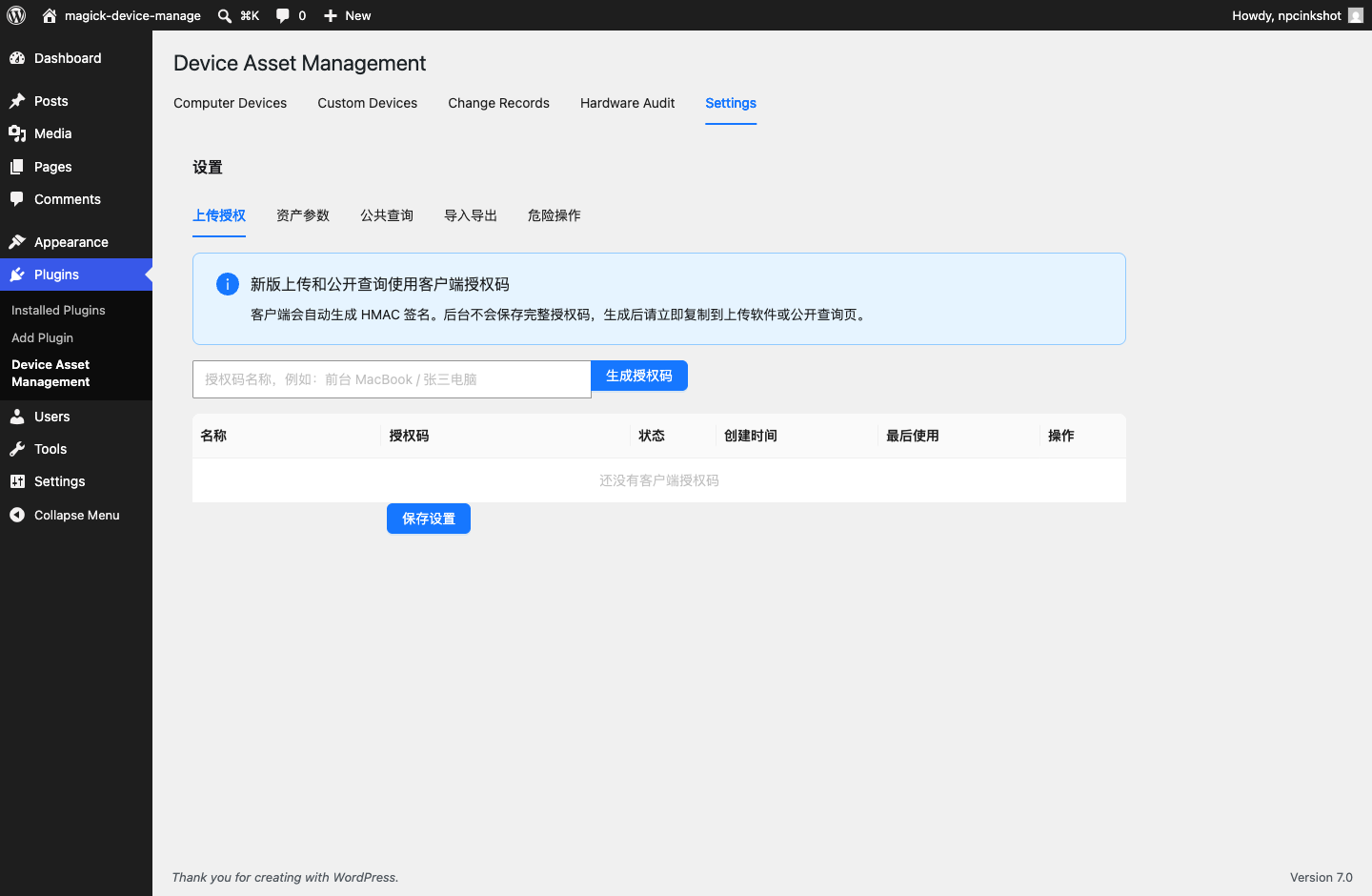
- Signed REST uploads for optional desktop collection clients.
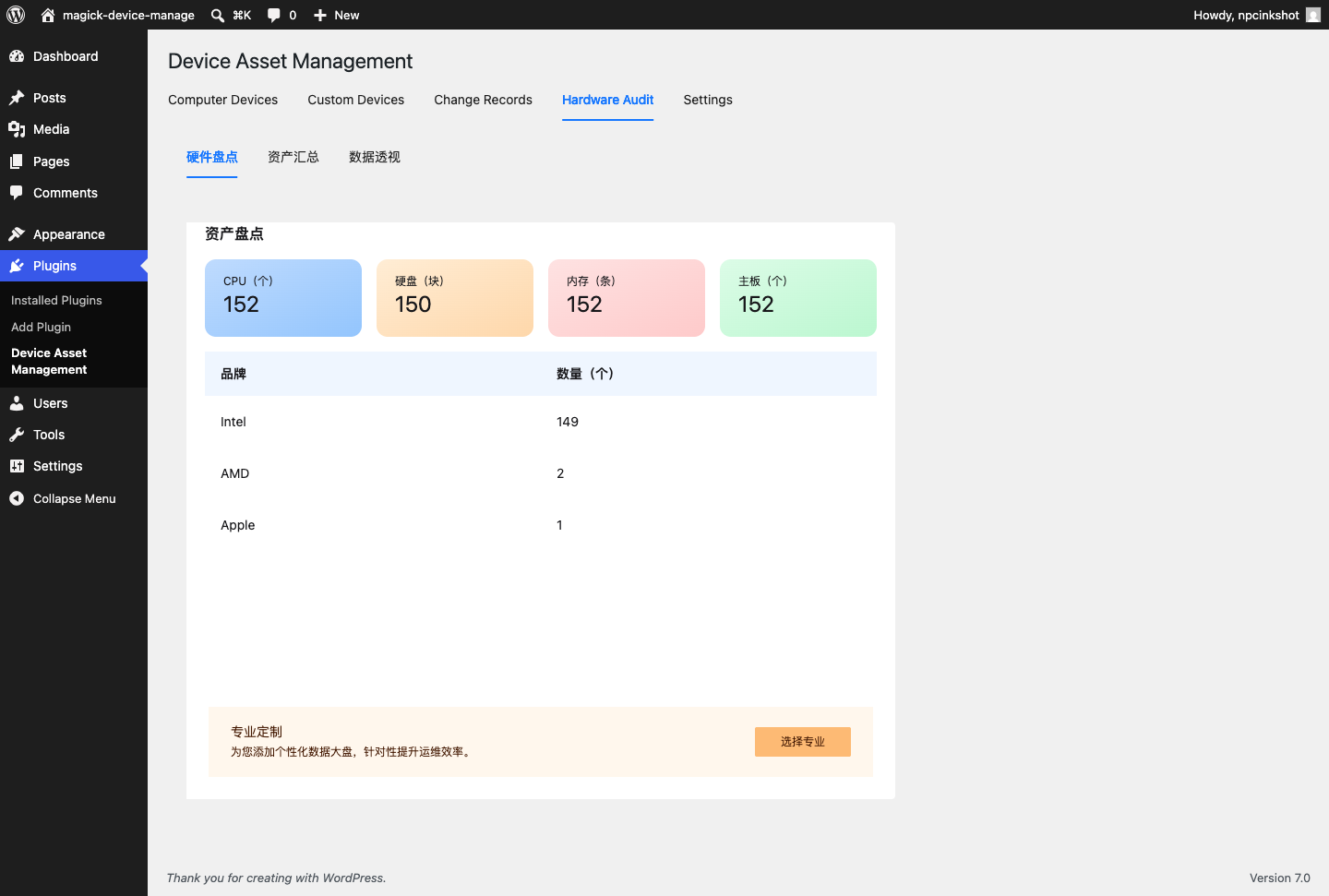
- Observation snapshots for collected hardware facts.
- Event timelines for asset creation, updates, observations, and notes.
- A bundled React admin workspace for asset review and client token management.
The WordPress plugin does not load JavaScript or CSS from third-party CDNs. Built React assets are bundled locally in the plugin package. The corresponding React/TypeScript source and build configuration are maintained in the project repository under vite-admin.
Privacy
Npcink Device Inventory stores device asset data in the local WordPress database. Depending on how the site owner configures and uses the plugin, stored data may include device names, assigned users or locations, departments, status values, IP addresses, hardware identifiers, hardware details, and event history.
The plugin does not transmit this data to Npcink or any third-party server during normal plugin operation. Site administrators are responsible for informing users and employees about their own device inventory policies.
Screenshots
Installation
- Upload the
npcink-device-inventoryfolder to/wp-content/plugins/. - Activate the plugin from the WordPress Plugins screen.
- Open Plugins > Device Inventory.
- Generate a client authorization token before using the optional desktop uploader.
FAQ
-
Does this plugin send data to a third-party service?
-
No. The WordPress plugin stores device asset data in the site’s own WordPress database and does not contact a third-party service for normal operation.
-
What data is stored?
-
The plugin can store asset names, numbers, ownership fields, departments, statuses, hardware identifiers, collected hardware observations, and event history.
-
Are device upload endpoints open to anonymous users?
-
No. Device upload endpoints require a client authorization token and HMAC signature. Admin endpoints require a WordPress user with
manage_options. -
What happens on uninstall?
-
The plugin only deletes its custom tables and settings when the stored v3 uninstall option explicitly allows data deletion.
-
Can I restore a JSON backup on another site?
-
Yes. Use the admin JSON backup preview first, review planned creates, updates, skipped rows, conflicts, and warnings, then confirm the import. The restore process merges plugin business data and does not clear existing inventory rows. Client upload secrets, public query access code plaintext, public query enabled state, and client upload base URL are not restored from backups and must be configured again on the target site.
-
Where is the source for bundled JavaScript?
-
The project repository includes the built files and the corresponding React/TypeScript source:
- Admin app source:
vite-admin/src - Build configuration:
vite-admin/package.jsonandvite-admin/vite.config.ts
Run
npm install && npm run buildinsidevite-adminto rebuild the bundled assets. - Admin app source:
Reviews
There are no reviews for this plugin.
Contributors & Developers
“Npcink Device Inventory” is open source software. The following people have contributed to this plugin.
Contributors
Translate “Npcink Device Inventory” into your language.
Interested in development?
Browse the code, check out the SVN repository, or subscribe to the development log by RSS.
Changelog
2.7.8
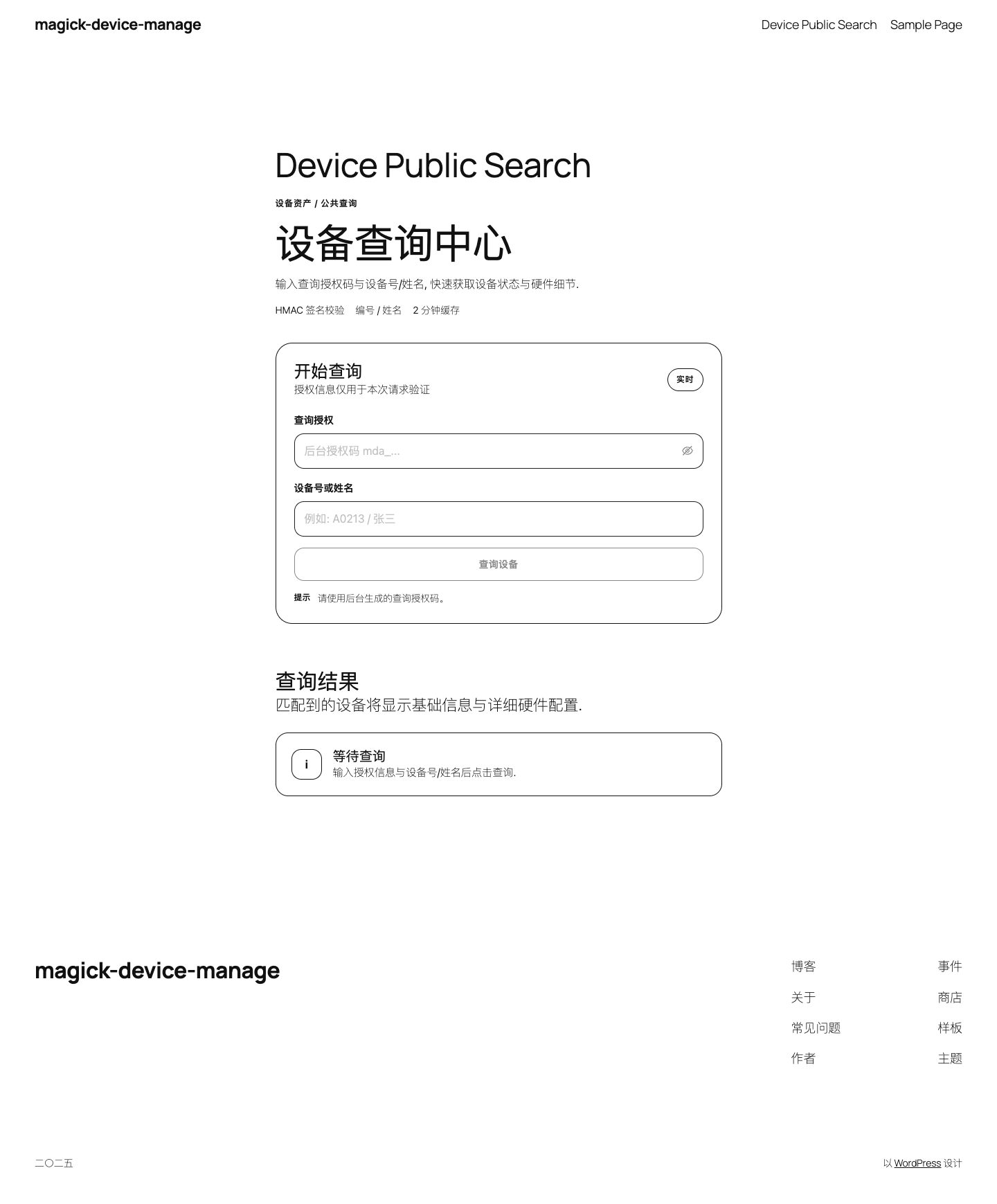
- Require an access code before public asset query can be enabled and add rate limiting to the public query endpoint.
- Reduce high-cost asset list JSON and observation searches for ordinary keywords while keeping IP, MAC, and serial-style extended searches.
- Remove the duplicate in-page desktop update panel and keep update checks in the native menu / top settings surface.
- Add release regression fixtures for public query hardening and asset search performance guardrails.
- Refresh WordPress.org release metadata for consistent update detection.
2.7.7
- Add desktop update manifest validation to the tagged release workflow.
- Document the release candidate verification flow for plugin and desktop preview artifacts.
- Bump the desktop uploader to 0.1.4 for the next signed updater validation path.
2.7.6
- Bump the desktop uploader to 0.1.3 to verify the signed GitHub Release updater flow from 0.1.2.
2.7.5
- Add GitHub Release powered desktop uploader update checks and signed Tauri updater metadata.
- Fix uploaded observation timestamps so admin update times display in the local timezone.
- Hide archived assets from default asset lists while preserving archived data for exports, backups, and explicit archived-status filters.
2.7.4
- Default the admin computer asset list to latest observed uploads and show upload update time consistently.
- Improve first-screen admin loading, detail modal rendering, search highlighting, and macOS device visuals.
- Localize the plugin list settings link and reduce desktop uploader success dialog details to asset number and device.
2.7.3
- Improve the admin asset inventory workspace with clearer hardware inventory and value analysis views.
- Group memory inventory by capacity and disk inventory by disk type and capacity.
- Improve device upload matching and client feedback for repeated uploads.
2.7.2
- Add short-lived object caching around custom inventory table reads.
- Replace dynamic asset list SQL fragments with fixed prepared query conditions.
- Scope Plugin Check database query annotations to the relevant custom table reads and writes.
2.7.1
- Keep release packages free of macOS metadata files.
- Keep the desktop uploader package name in English for safer installer paths.
2.7.0
- Store JSON-encoded custom table payloads as LONGTEXT for broader MySQL and MariaDB compatibility.
- Updated active upload documentation to use the signed v3 device observations endpoint.
2.6.1083
- Rebuilt the plugin around the v3 asset registry.
- Replaced legacy four-table admin screens with the v3 asset workspace.
- Moved desktop uploads to signed v3 device observations.